
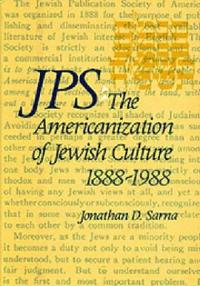
Priset kommer från butiken och kan ändras. Kontrollera pris, storlek och leverans hos butiken innan du beställer.
Jonathan Sarna’s meticulously documented centennial history presents the personalities and the controversies, the struggles and the achievements behind a century of publishing by America’s foremost publisher of Jewish books in English.
Sarna’s engaging blend of anecdote and analysis contextualizes the Jewish Publication Society within American Jewry’s evolving social, political, and cultural history. He demonstrates that the society has been a major factor.
Sarna recounts the inspired struggle of the Jewish Publication Society’s founders, a group of genteel Philadelphia philanthropists including Cyrus Adler and Mayer Sulzberger, who believed fervently in the need to educate their immigrant coreligionists with Jewish books in the new vernacular.
He also tells the story of Henrietta Szold, best known for her later achievements as the founder of Hadassah and Youth Aliyah. Szold worked doggedly for twenty-three years as the society’s first editor until a shattered love for a JPS author became the catalyst that led her to Palestine and Zionist leadership. Here too are fascinating accounts of the long deliberations and intense work that produced the authoritative JPS Bible translations of 1917 and 1985, translations acceptable to all major branches of Judaism.
Sarna also recounts the controversy surrounding the 1973 publication of The Jewish Catalog, a project developed by the bold JPS editor Chaim Potok. The Catalog, embodying the spirit of the Jewish counterculture, not only became the best-selling JPS book after the Bible, but it also showed that JPS could meet the challenge of a new generation as it moved toward its second century.